Understanding Slab Leaks in Victoria, Texas
A slab leak occurs when a pressurized water supply line or drainage pipe buried directly beneath or encased in a poured concrete slab foundation develops a fissure, pinhole, or fracture. In Victoria, Texas, thousands of residential homes built from the 1960s through the 1980s were constructed on monolithic concrete slabs with annealed copper tubing installed in the sandy sub-base beneath the slab.
Over decades of exposure to hot coastal temperatures, mineral-rich local municipal water, and relentless soil dynamics, these subsurface lines deteriorate. What begins as a microscopic pinhole leak can rapidly erode soil bedding under the slab, creating voids that cause the concrete foundation to settle unevenly and crack.
Warning Signs Checklist: When to Suspect a Slab Leak
Because foundation plumbing lines are hidden from view, homeowners must watch for subtle behavioral and physical clues inside the home. If you notice any combination of the following indicators, contact an experienced slab leak plumber Victoria technician right away:
Warm Spots on Flooring
Unexplained hot spots on tile, laminate, or carpeted floors typically indicate a pressurized hot water line rupture radiating thermal energy upward through the concrete.
Sound of Rushing Water
Hearing a constant hiss, trickle, or running water sound through walls or floors when all fixtures, toilets, and appliances are completely shut off.
Continuous Water Meter Movement
The low-flow indicator dial on your exterior municipal meter continues spinning even after closing every individual valve inside the home.
Sudden Water Bill Spikes
Unexplained increases in your monthly utility statement without a corresponding change in household water consumption or irrigation routines.
Damp Flooring or Baseboard Warping
Moisture seeping upward through slab pores, causing squishy carpet, loosened flooring adhesive, swollen baseboards, or persistent musty odors.
Foundation & Wall Hairline Cracks
New vertical or diagonal fissures emerging along sheetrock, crown molding, or exterior foundation perimeter beams caused by shifting sub-slab soil.
Suspect a Leak Under Your Foundation?
Early intervention prevents expensive structural settling and subfloor water damage. Speak directly with a local foundation plumbing specialist today.
(888) 205-7875What to Do Immediately When You Detect a Leak
If you suspect an active under slab leak repair Victoria situation, taking immediate protective steps minimizes soil erosion and home interior damage:
- Locate and shut off the main water valve: Turn the emergency water shutoff valve near the water heater or exterior meter clockwise to stop pressurized water loss.
- Document observable indicators: Take clear, well-lit digital photographs of any wet flooring, damp baseboards, foundation hairline cracks, or meter readings for your records.
- Turn off electric or gas supply to the water heater: If the leak involves the domestic hot water side, disabling the heater prevents the heating elements from burning out dry.
- Contact a dedicated professional: Call for prompt acoustic line tracing rather than attempting invasive digging or jackhammering on your own.
How Detection and Under-Slab Repair Work Step by Step
Resolving a leak under foundation Victoria home requires methodical diagnostic precision before any physical work takes place. A reputable technician never breaks concrete on guesswork.
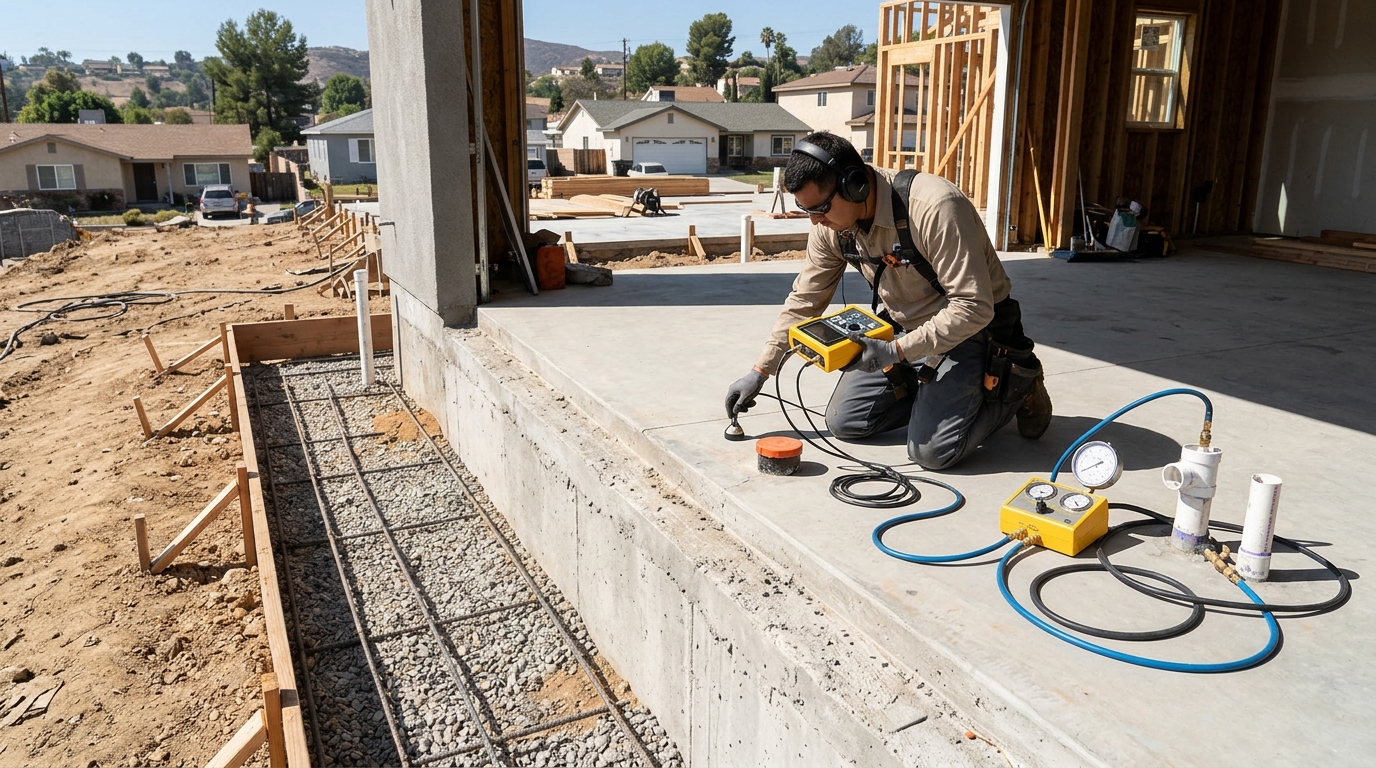
- Step 1: Isolation and Pressure Decay Testing: The entire plumbing manifold is compartmentalized. Technicians install high-precision pressure gauges on domestic hot and cold systems to verify exactly which branch has lost integrity.
- Step 2: Electronic Acoustic Sonar and Line Tracing: Using subterranean listening microphones and electronic pulse transmitters, the specialist traces the precise path of the copper line and pinpoints the acoustic frequency produced by pressurized water escaping beneath the slab.
- Step 3: Thermal Imaging Verification: For heated lines, high-resolution infrared cameras map the thermal signature beneath tile or engineered flooring, verifying the exact breach coordinates.
- Step 4: Formulating the Right Repair Strategy: Once the exact fault point is mapped, technicians assess whether direct spot repair, an overhead reroute, or a broader repipe provides the safest long-term remedy.
Repair Options: Spot Repair, Rerouting, or Whole-House Repiping
Every home foundation in Victoria is distinct. Technicians weigh three core engineering approaches to address foundation pipe failures:
Direct Spot Repair: When concrete flooring is easily accessible and copper piping elsewhere is in sound condition, a contractor opens a compact access hole through the slab, removes contaminated soil, cuts out the punctured copper section, and brazes in new hard copper with silver-solder joints. However, disturbing older concrete in coastal clay soils carries inherent disruption.
Overhead Slab Leak Rerouting: Rather than jackhammering through decorated tiles or interior foundation beams, modern plumbing standards prefer bypassing the compromised line completely. New high-grade cross-linked polyethylene (PEX) tubing is routed through interior wall cavities and overhead attic trusses, leaving the failed underground line abandoned harmlessly beneath the slab.
Whole-House Repiping: When an older property has suffered multiple pinhole failures or contains degraded galvanized or failing polybutylene lines, isolated repairs often lead to repeat breaches months later. A complete overhead repipe delivers a permanent modern plumbing infrastructure above the foundation.
Factors That Influence Slab Leak Repair Cost in Victoria
When considering slab leak repair cost Victoria homeowners should understand the engineering variables that shape project scope. Without quoting fixed prices, primary factors include:
- Accessibility of the compromised pipe: Lines situated beneath load-bearing grade beams, expensive custom tile, or kitchen cabinetry require specialized access compared to lines in open corridors.
- Selected repair method: A targeted single-line overhead reroute carries different labor, material, and drywall restoration requirements than localized slab excavation or whole-home repiping.
- System condition and pipe material: The age, diameter, and corrosion status of existing sub-slab plumbing determine whether localized repair is practical or if broader system replacement is warranted.
- Diagnostic complexity: Highly intricate multi-branch manifold configurations require advanced acoustic tracing and thermal analysis.
Comprehensive Foundation Plumbing Services in Victoria
We provide specialized diagnostic and remedial plumbing services tailored specifically to Victoria slab-on-grade homes and surrounding communities:
Slab Leak Detection
Pinpoint subsurface pressurized line breaches using non-destructive acoustic sensors, pressure decay tests, and electromagnetic line transmitters without unnecessary concrete damage.
Explore Detection Services →Hot Water Slab Leak Repair
Hot water lines endure continuous thermal expansion and contraction cycles under concrete. We isolate leaking hot lines quickly to stop warm floors and spiraling energy bills.
Explore Hot Water Leaks →Slab Leak Reroute
Bypass vulnerable underground copper lines entirely by installing modern PEX pathways through walls and attic spaces, eliminating destructive floor jackhammering.
Explore Reroute Solutions →Whole-House Repiping
When aging infrastructure leads to repeat slab failures, complete above-slab repiping with flexible PEX or durable copper restores whole-home reliability.
Explore Repiping Systems →Water Leak Detection
Non-invasive tracing for hidden leaks located inside wall cavities, overhead ceilings, under bathroom fixtures, or across exterior yard water service mains.
Explore Leak Detection →Cast Iron Pipe Replacement
Under-slab cast iron drain systems from the mid-century corrode and channel out over time. We provide video sewer inspections and under-slab drain rehabilitation.
Explore Cast Iron Repairs →Slab Leak Insurance Help
Navigate the insurance process smoothly with detailed diagnostic reports, photographic evidence, and moisture readings formatted for carrier adjusters.
Explore Insurance Guidance →Frequently Asked Questions About Slab Leaks in Victoria
What causes slab leaks to happen frequently in Victoria homes?
The primary culprit is expansive coastal clay soil movement common throughout Victoria County. As clay soils cycle through periods of heavy Gulf humidity and dry summer droughts, sub-slab foundations shift. This friction rubs copper lines against abrasive aggregates, causing thin spots and pinhole leaks. Mineral content in municipal water also contributes to internal pipe pitting.
Can I leave a minor slab leak untreated for a few weeks?
No. Even a tiny pinhole leak releases hundreds of gallons of pressurized water daily into the substrate below your foundation. This washes away foundational soil bedding, creating unsupported voids that result in cracked concrete beams, severe interior drywall separation, ruined flooring, and indoor mold colonization.
Is it better to jackhammer the slab or reroute the pipe overhead?
In most residential situations, an overhead reroute is cleaner, less disruptive, and more reliable. Jackhammering indoor concrete produces airborne dust, damages expensive flooring, and repairs only an isolated section of an already aged pipe. Rerouting replaces the vulnerable section with modern PEX tubing routed safely through walls or attic spaces.
Does homeowners insurance pay for slab leak repairs in Texas?
Texas homeowner policies typically distinguish between the tear-out access, resulting interior water damage, and the plumbing pipe itself. Insurers often cover the cost of opening and restoring the foundation or walls and remediating water-damaged flooring, but exclude the physical pipe repair. Homeowners should always review their policy declarations with their carrier.